Going back some, the goal compound N#Cc3c(N)cc(O)c4c1C=NNCc1c2CC(=O)N=Cc2c34 from the start of this thread: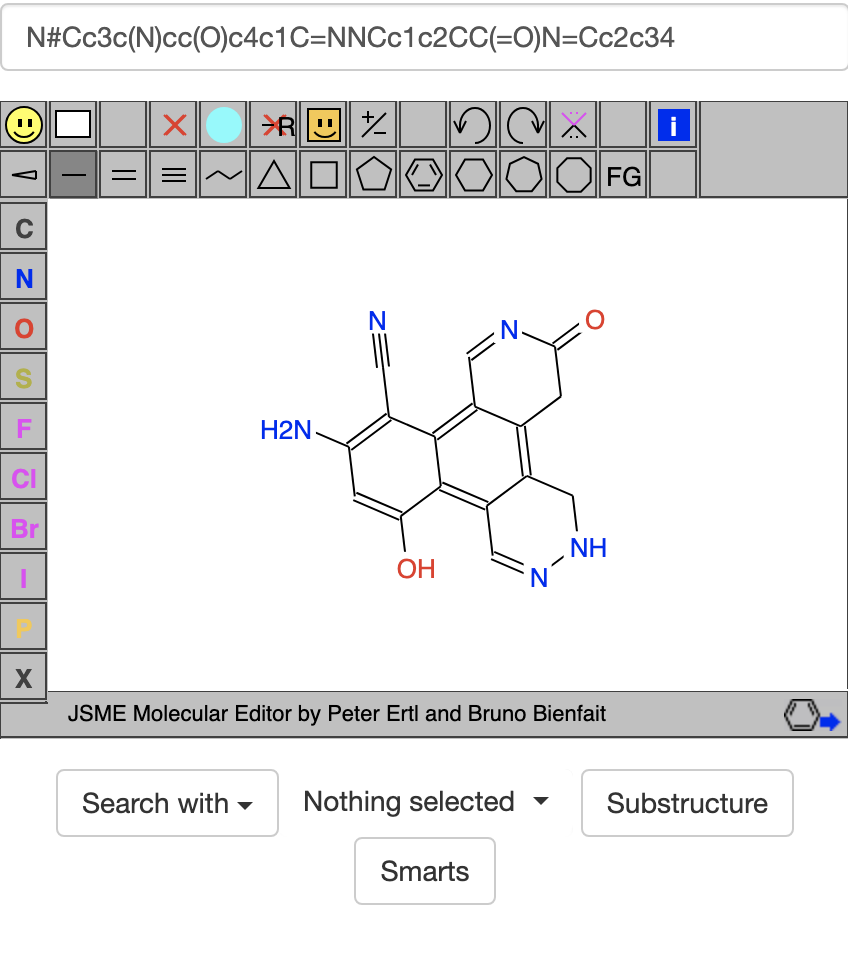 contains 5 N atoms (3 with 0 H's, 1 with 1 H, & 1 with 2 H's) and 2 O atoms (1 with 0 H's & 1 with 1 H). Using the . symbol in SMARTS, one can enumerate these several ways. The literal way is
 [#7;H0].[#7;H0].[#7;H0].[#7;H1].[#7;H2].[#8;H0].[#8;H1], where #7 stands for N, #8 stands for O, H0 stands for no H's, H1 for 1 H, and H2 for 2 H's. Another way is to let N's & O's be used interchangeably, as in [#7,#8;H0].[#7,#8;H0].[#7,#8;H0].[#7,#8;H0].[#7,#8;H1].[#7,#8;H1].[#7,#8;H2]. Another way lets the original -NH2 be replaced by -NH & -NH, -NH & -OH, or -OH & -OH, as in [#7,#8;H0].[#7,#8;H0].[#7,#8;H0].[#7,#8;H0].[#7,#8;H1].[#7,#8;H1].[#7,#8;H1].[#7,#8;H1]. Another way tries to keep nearby groups together, as in [#7,#8;H0]*[#7,#8;H0].[#7,#8;H0].[#7,#8;H0][#7,#8;H1].[#7,#8;H1].[#7,#8;H2] or [#7,#8;H0]*[#7,#8;H0].[#7,#8;H0]***([#7,#8;H2])**[#7,#8;H1].[#7,#8;H0][#7,#8;H1]. Which way to choose depends on what groups matter most to you and what compounds each way gives. Usually some compromise is needed.
Going with the last combination above gives: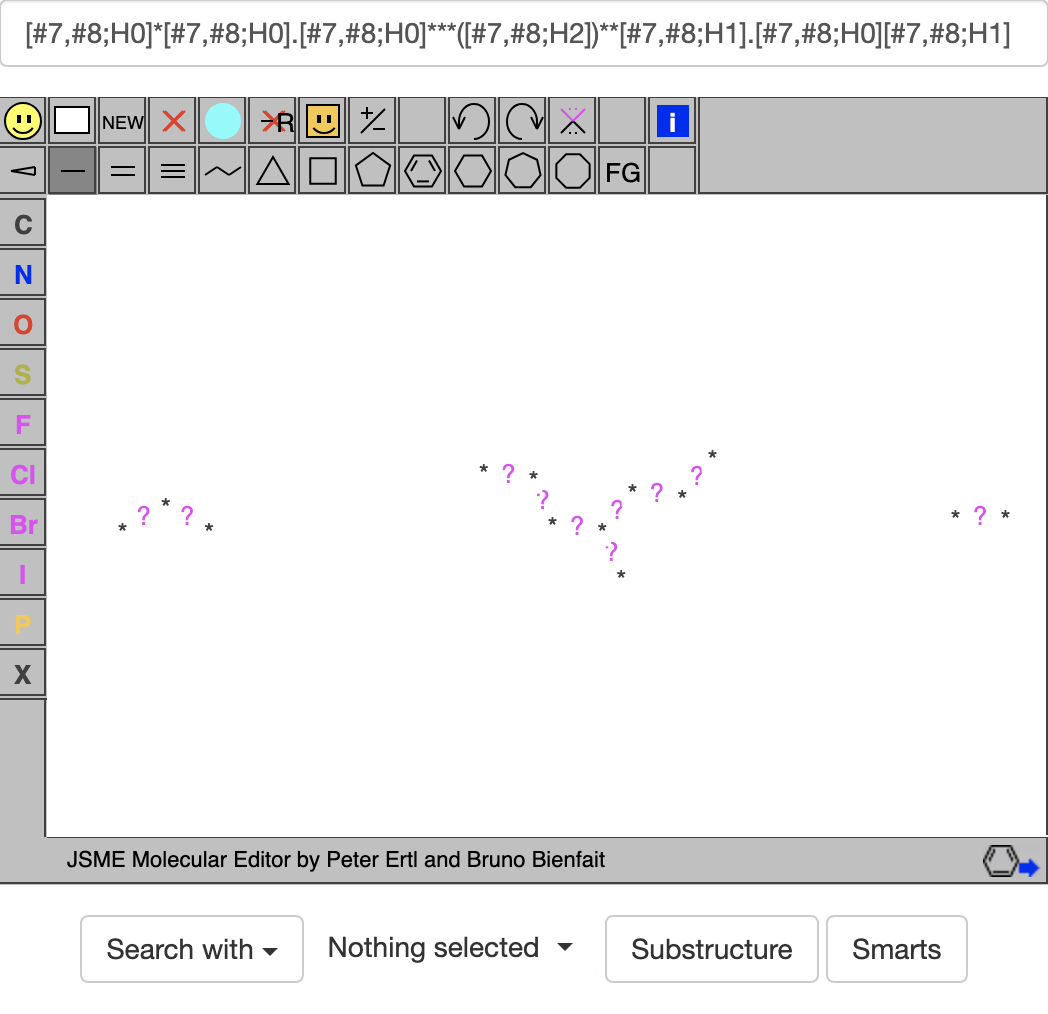 With this, clicking on the SMARTS button gives https://zinc20.docking.org/substances/?sub_id-matches-sma=%5B%237%2C%238%3BH0%5D*%5B%237%2C%238%3BH0%5D.%5B%237%2C%238%3BH0%5D***%28%5B%237%2C%238%3BH2%5D%29**%5B%237%2C%238%3BH1%5D.%5B%237%2C%238%3BH0%5D%5B%237%2C%238%3BH1%5D with at least 100 hits. If your ligand is for a puzzle like 2419 that wants 4 or less rotatable bonds (rb), you can add the clause &rb-le=4 (rb <= 4) or &rb-lt=5 (rb<5) to the search to get https://zinc20.docking.org/substances/?sub_id-matches-sma=%5B%237%2C%238%3BH0%5D*%5B%237%2C%238%3BH0%5D.%5B%237%2C%238%3BH0%5D***%28%5B%237%2C%238%3BH2%5D%29**%5B%237%2C%238%3BH1%5D.%5B%237%2C%238%3BH0%5D%5B%237%2C%238%3BH1%5D&rb-le=4 which gives only 71 hits. Two of these hits are ZINC #'s 9144826:
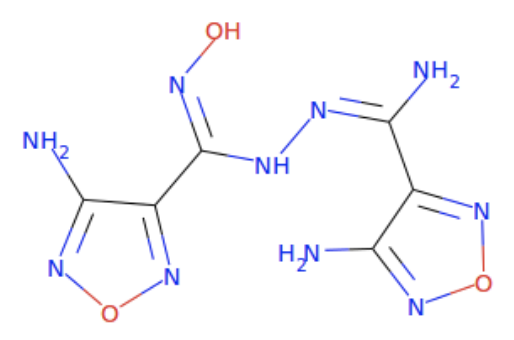 and 1578205461:
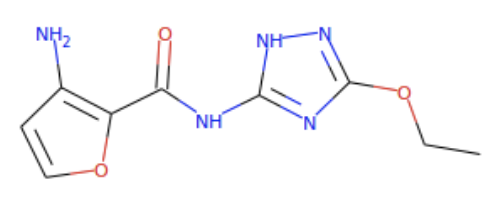 In ZINC # 9144826, the goal compound's cyano, -NH2, -OH part is replaced by an N in the lower left pentagon, the nearby -NH2, and the nearby -NH-. Meanwhile, the goal compound's =N-NH- part is replaced by =N-OH, and its =N-C=O part is replaced by the =N-O-N= in the lower right ring. Similarly, in ZINC # 1578205461, the goal compound's cyano, -NH2, -OH part is replaced by the left ring's O, the nearby -NH2, and the nearby -NH-. Meanwhile, the goal compound's =N-NH- part is in the right ring, and its =N-C=O part is replaced by the =N-C-O- going to the right from the right ring. Neither of these ligands is a perfect match for the goal compound, but they both come close to its general topology. With a little twisting, they might fit where the goal compound would fit.

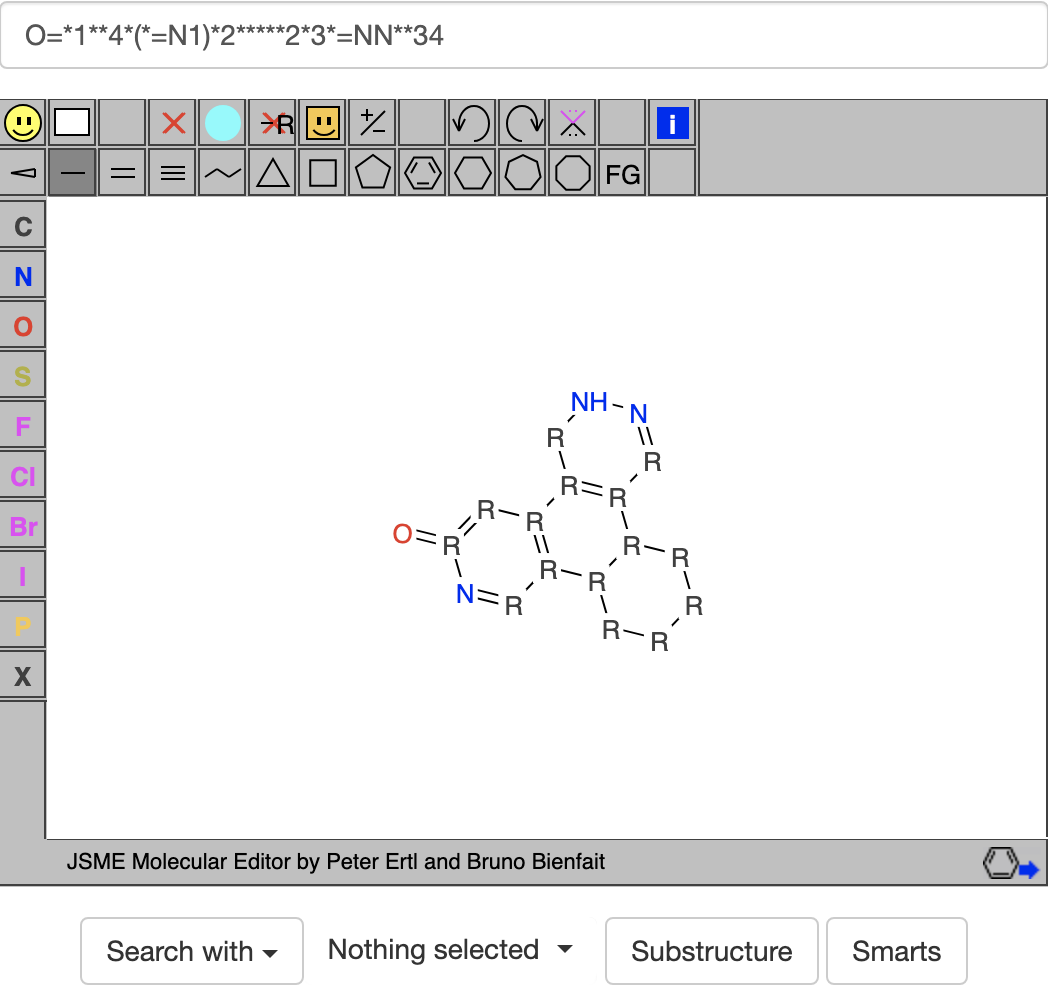 Then I replaced the acceptors O= and =N with [#7,#8] and the donor N (NH in the molecule viewer) with [#7,#8;!H0] to get
 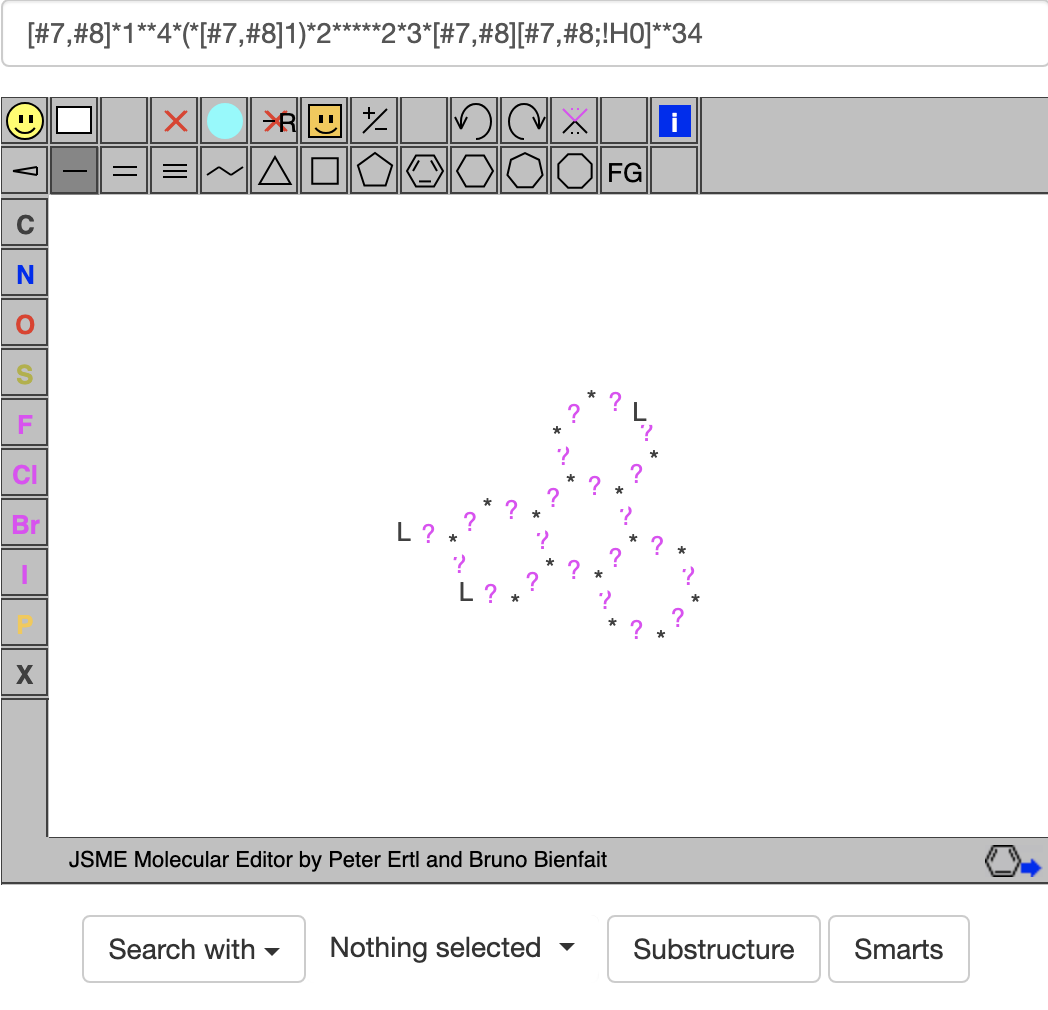 where L stands for an acceptor atom, ? stands for a general bond, and * can stand for a general atom or a donor atom. When I clicked on the SMARTS button, I was hoping for a list of compounds with 4 fuzed 6-rings containing at least 3 acceptors and 1 donor. Unfortunately, when I clicked on the SMARTS button, it gave no hits.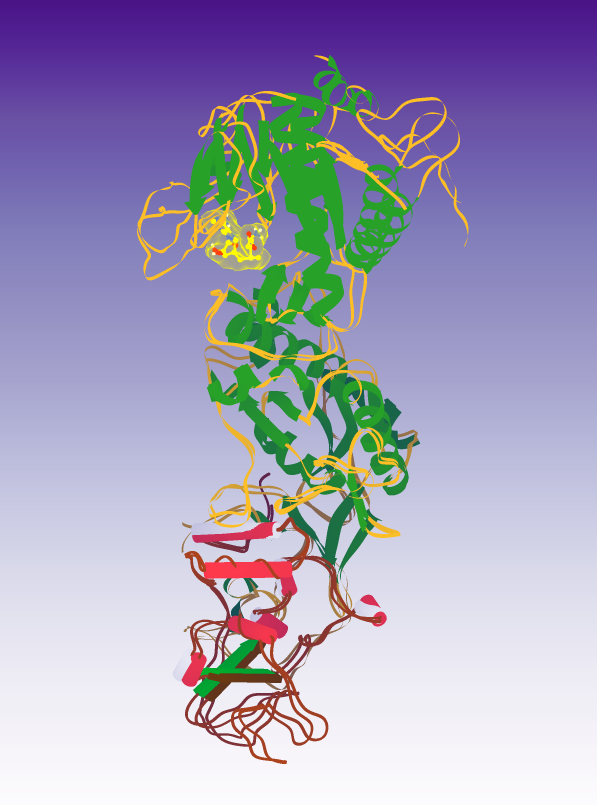
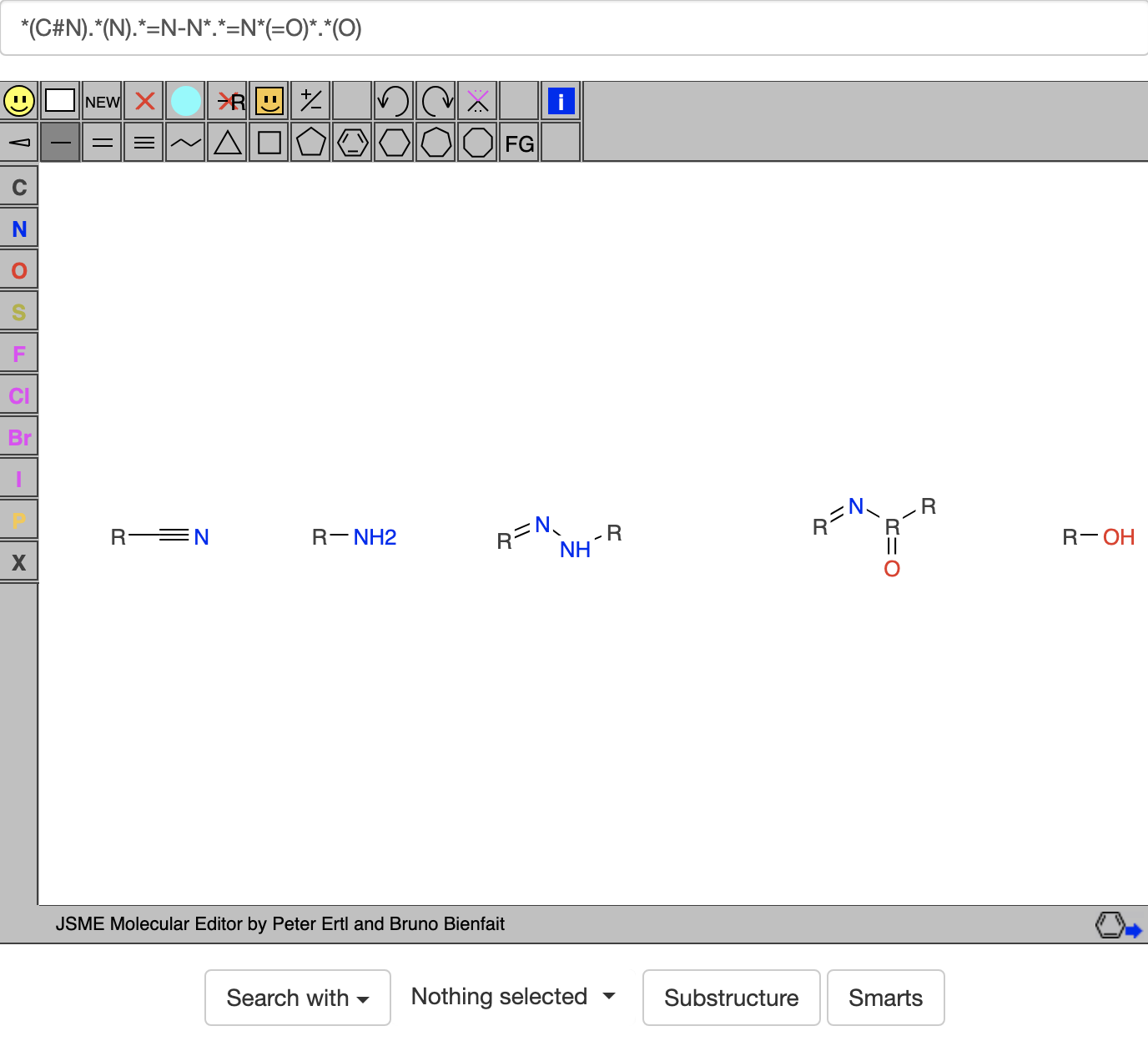 If you then click on the SMARTS button, it gives
 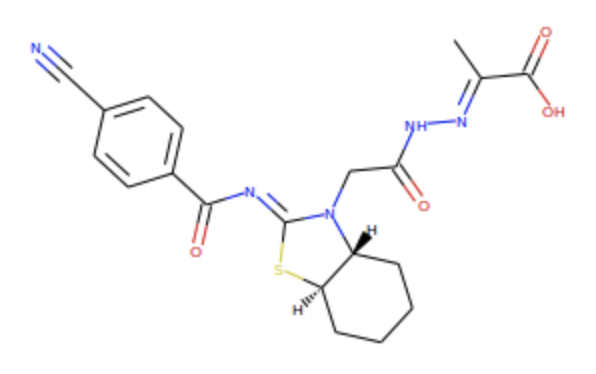 Note that the -NH2 group isn't so obvious. I think its N appears at one vertex of the pentagonal ring.