

Placeholder image of a protein
Icon representing a puzzle

2157: KLHDC2 ligand design: Round 8

Closed since over 3 years ago

Intermediate Overall Small Molecule Design

Summary


Created
June 08, 2022
Expires
Max points
100
Description

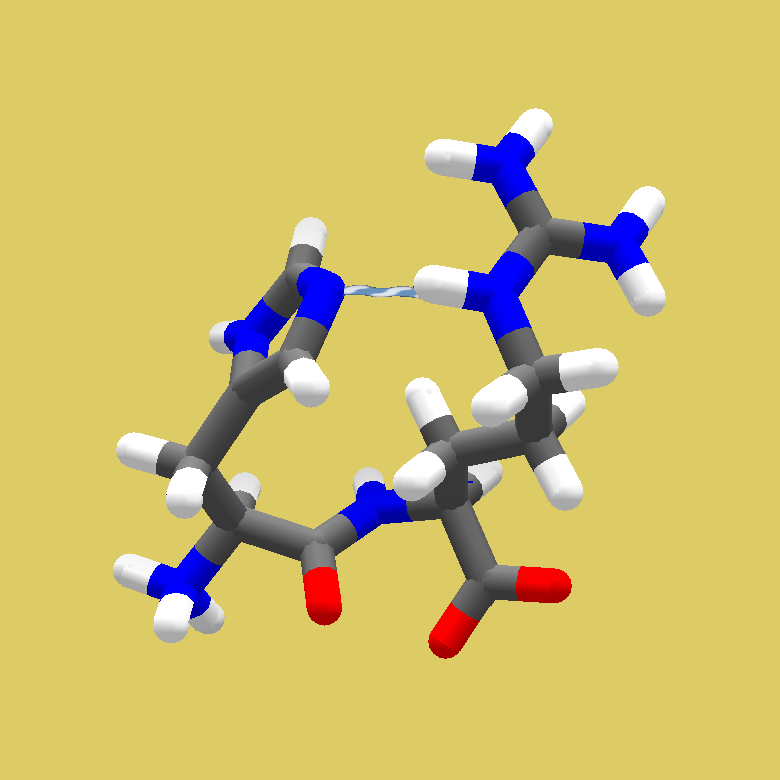
Design a small molecule which can bind to KLHDC2! We don't want you to modify the protein, but instead use the small molecule design tools to build new small molecules which fit into the KLHDC2 binding pocket.


Note: To get the most out of the small molecule design tools, we recommend changing you view settings to the Small Molecule Design Preset.


THINK SMALL. It looks like the synthesis of novel compounds is going to be pushed back a bit, so we're trying a complementary approach. We'll be looking for already-purchasable molecules which are close to your designs. But to maximize our success, it will help to keep the molecules small. To that end, the Molecular Weight objective has been greatly tightened -- we're looking for molecules which are not that much bigger than the current starting molecule, but which still make all the good interactions. We're also increasing the penalty for having peptide-like structures. See the blog post and the previous puzzles for more background information, and pay attention to the various objectives.


This is a project in collaboration with Boehringer Ingelheim & Oxford University. Boehringer Ingelheim & Oxford have committed to help evaluate and test the molecules which Foldit players have designed. The structures of all compounds created as part of the collaboration puzzles as well as any experimental results from testing them will be made publicly available. All participants and game sponsors of current and future small molecule design games commit to complying with the Foldit Terms of Service including those pertaining to intellectual property.

Top groups


  1. Avatar for Go Science 100 pts. 23,117
  2. Avatar for Contenders 2. Contenders 65 pts. 22,810
  3. Avatar for Anthropic Dreams 3. Anthropic Dreams 41 pts. 22,720
  4. Avatar for Gargleblasters 4. Gargleblasters 24 pts. 22,210
  5. Avatar for BIchallenge 5. BIchallenge 14 pts. 22,134
  6. Avatar for Marvin's bunch 6. Marvin's bunch 7 pts. 21,329
  7. Avatar for Australia 7. Australia 4 pts. 21,059
  8. Avatar for L'Alliance Francophone 8. L'Alliance Francophone 2 pts. 19,600
  9. Avatar for Beta Folders 9. Beta Folders 1 pt. 19,326
  10. Avatar for Team China 10. Team China 1 pt. 19,306

  1. Avatar for dcrwheeler 11. dcrwheeler Lv 1 49 pts. 22,286
  2. Avatar for BootsMcGraw 12. BootsMcGraw Lv 1 46 pts. 22,279
  3. Avatar for HuubR 13. HuubR Lv 1 42 pts. 22,210
  4. Avatar for ucad 14. ucad Lv 1 39 pts. 22,148
  5. Avatar for julianfuchs 15. julianfuchs Lv 1 36 pts. 22,134
  6. Avatar for Larini 16. Larini Lv 1 33 pts. 22,125
  7. Avatar for alcor29 17. alcor29 Lv 1 31 pts. 22,119
  8. Avatar for Bruno Kestemont 18. Bruno Kestemont Lv 1 28 pts. 22,116
  9. Avatar for Crossed Sticks 19. Crossed Sticks Lv 1 26 pts. 22,011
  10. Avatar for infjamc 20. infjamc Lv 1 24 pts. 21,974

Comments


rmoretti Staff Lv 1

There's a number of objectives. Most of them are there to keep the molecule going "too far" outside the range of acceptable parameters for drugs.

All objectives give +1000 points when fully satisfied, for a maximum of +13 000. Most objectives have a "Show" button which should highlight areas of concern in red. Even when fully satisfied, objectives may highlight groups which may eventually contribute, so it's not recommended to keep Show on at all times.

  • Carboxylate Interaction - A bonus for keeping the hydrogen bonds the existing carboxylate is making. (Show highlights the protein atoms you need to make the hydrogen bonds to.)
  • Ligand Hydrophobic Interaction - A bonus for keeping a hydrophobic interaction between the ligand and the protein. (Show highlights the protein residues the ligand should contact.)
  • HBond - A bonus for keeping existing hydrogen bonding interactions. (Show highlights the atoms to make hydrogen bonds to.) There are two potential hydrogen bonds, you need both to get the bonus.
  • Peptide - Penalizes the formation of peptide-backbone-like groups. (Show highlights which parts of the ligand should be changed.)
  • Torsion Quality - Keeps bond rotations in a good range. Using Wiggle or Tweak Ligand can fix bad torsions. (Show highlights torsions to be rotated.)
  • Number of Rotatable Bonds - Intended to keep the ligand from getting too big and floppy. You can reduce rotatable bonds by deleting groups or forming rings. (Show highlights rotatable bonds.)
  • Ligand TPSA - Topological Polar Surface Area - Keeps the polar surface area (including buried polar surface) low. To improve, try removing oxygens and nitrogens. (Show highlights atoms contributing to higher TPSA.)
  • Ligand cLogP - A measure of polarity - Keeps the molecule from getting too hydrophobic. To improve, try adding polar oxygens and nitrogens. (Show highlights atoms contributing to higher cLogP.)
  • Ligand Hydrogen Bond Donors - Keep the number of ligand hbond donors low. (Show highlights atoms contributing to higher cLogP.)
  • Bad Groups - Gives a bonus for avoiding groups that aren't very drug-like, including enol, enamine, thiocarbonyl, hydroxylamines, geminal diols, alpha-beta unsaturated carbonyls, aliphatic alkanes, aliphatic alkenes, aliphatic ethers and others. (Show highlights groups at issue.)
  • Element Counts - Limits certain element numbers: Desired P=0, S<=1, I<=1, Br<=1, Cl<=4, F<=4, N<=5 (Show highlights atoms of elements exceeding count.)
  • Molecular Weight - Intended to keep the ligand small.
  • Synthetic Accessibility - Identify molecules which are likely to be hard to make in the lab. (Show highlights regions of the molecule contributing to difficult synthesis.)