

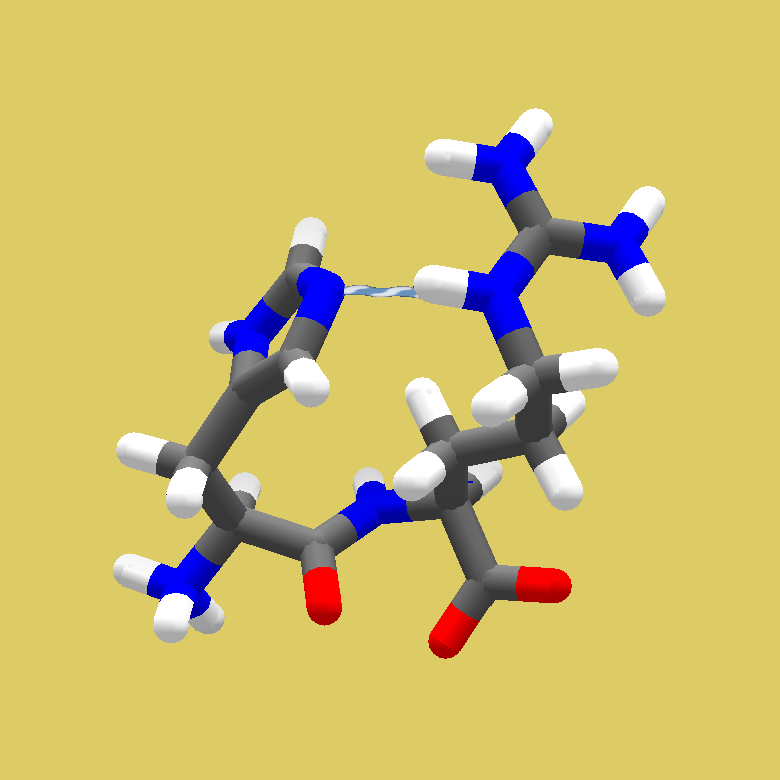


Placeholder image of a protein
Icon representing a puzzle

2289: G-Protein-Coupled Receptor GPR133: Round 5

Closed since almost 3 years ago

Intermediate Overall Small Molecule Design

Summary


Created
April 14, 2023
Expires
Max points
100
Description

Help us take on unexplored drug targets for brain cancer! While 1/3 of all approved drugs target G-protein-coupled receptors (GPCRs), many of these receptors remain without appropriate small molecule ligands. This is a field of growing interest with many untouched possibilities for therapeutics. The receptor GPR133 used in this puzzle (also known as ADGRD1) was identified by researchers as a critical regulator of the response to hypoxia, low levels of oxygen in bodily tissue, and tumor growth in glioblastoma, a malign and very aggressive type of brain cancer. The interest in developing therapeutics is very high, and no small-molecule (ligand) is known so far. The structure of GPR133 was determined last year and the discovery of ligands would help to create novel therapeutics. Normally a larger molecule like a peptide would be used, but we would like to design a small molecule to fit inside this binding site to understand the mechanism of the receptor.

From the set of the best compounds submitted in the upcoming puzzle rounds, if possible, we will select a few compounds for synthesis and potential in-vitro testing. Only compounds deemed synthesizable by our chemists will be selected, so it's beneficial to make use of the Compound Library panel to search for library compounds similar to your current design. However, you shouldn’t just limit yourself to the Compound Library. You're more likely to get good results by alternating: optimizing the molecule with the small molecule design tools, find the closest library compound, then further refine it with the design tools.

Note: To get the most out of the small molecule design tools, we recommend changing you view settings to the Small Molecule Design Preset.

For round 5, we've increased the flexibility of protein by allowing sidechains within the pocket to be movable.

Top groups


  1. Avatar for Ogre's lab 100 pts. 27,042
  2. Avatar for Go Science 2. Go Science 73 pts. 26,734
  3. Avatar for Anthropic Dreams 3. Anthropic Dreams 52 pts. 25,797
  4. Avatar for Contenders 4. Contenders 36 pts. 25,724
  5. Avatar for AlphaFold 5. AlphaFold 24 pts. 25,467
  6. Avatar for Gargleblasters 6. Gargleblasters 16 pts. 23,923
  7. Avatar for VeFold 7. VeFold 10 pts. 23,528
  8. Avatar for FamilyBarmettler 8. FamilyBarmettler 6 pts. 22,825
  9. Avatar for L'Alliance Francophone 9. L'Alliance Francophone 4 pts. 22,384
  10. Avatar for Australia 10. Australia 2 pts. 22,369

  1. Avatar for spvincent 11. spvincent Lv 1 54 pts. 25,250
  2. Avatar for LociOiling 12. LociOiling Lv 1 51 pts. 24,700
  3. Avatar for nspc 13. nspc Lv 1 48 pts. 23,929
  4. Avatar for HuubR 14. HuubR Lv 1 45 pts. 23,923
  5. Avatar for maithra 15. maithra Lv 1 42 pts. 23,634
  6. Avatar for BootsMcGraw 16. BootsMcGraw Lv 1 39 pts. 23,591
  7. Avatar for Dr.Sillem 17. Dr.Sillem Lv 1 36 pts. 23,549
  8. Avatar for carxo 18. carxo Lv 1 34 pts. 23,528
  9. Avatar for WuWTq 19. WuWTq Lv 1 31 pts. 23,406
  10. Avatar for drumpeter18yrs9yrs 20. drumpeter18yrs9yrs Lv 1 29 pts. 23,324

Comments


Sciren Staff Lv 1

Objectives

Maximum bonus: +8000

Compound Library (max +1000)
Gives a bonus if your current compound is in the library. This uses a local cached version of the Compound Library search results to determine if the compound is in the library. If you manually create a compound that happens to be in the library (or if you load a shared solution with an on-library compound), you may need to submit the compound to the compound library search and wait to get the results back before the objective can properly recognize that the compound is in the library. (If the objective is not updating, try wiggling the structure. )

Torsion Quality (max +1000)
Keeps bond rotations in a good range. Using Wiggle or Tweak Ligand can fix bad torsions. (Show highlights torsions to be rotated.)

Number of Rotatable Bonds (max +1000)
Intended to keep the ligand from getting too big and floppy. You can reduce rotatable bonds by deleting groups or forming rings. (Show highlights rotatable bonds.)

Ligand TPSA (max +1000)
Topological Polar Surface Area - Keeps the polar surface area (including buried polar surface) low. To improve, try removing oxygens and nitrogens. (Show highlights atoms contributing to higher TPSA.)

Ligand cLogP (max +1000)
A measure of polarity - Keeps the molecule from getting too hydrophobic. To improve, try adding polar oxygens and nitrogens. (Show highlights atoms contributing to higher cLogP.)

Bad Groups (max +1000)
Gives a bonus for avoiding groups that interfere with assays, or which are far from the compounds in the library. (Show highlights groups at issue.)

Molecular Weight (max +1000)
Keeps the ligand a reasonable size.

Synthetic Accessibility (max +1000)
Keeps the ligand from going too far from the compounds in the library. (Show highlights parts of the molecule at issue.)