


Placeholder image of a protein
Icon representing a puzzle

2539: KCNQ1 VSD Round 10

Closed since over 1 year ago

Intermediate Overall Small Molecule Design

Summary


Created
November 15, 2024
Expires
Max points
100
Description

KCNQ1 is a critical gene that helps regulate the heart's rhythm by encoding the Kv7.1 potassium ion channel. Mutations in KCNQ1 can cause congenital long QT syndrome (LQTS), an inherited heart condition that increases the risk of sudden cardiac death, especially in young people. While previous puzzles have focused on one domain of KCNQ1, in this challenge we're taking a similar but different approach by targeting the Voltage Sensing Domain (VSD) of KCNQ1.

It has been found that mutations in the VSD affect how effectively the protein is transported from its site of synthesis to the plasma membrane—a process known as trafficking. Proper trafficking is essential for the Kv7.1 channel to function correctly in regulating heart rhythm. To tackle this issue, we conducted blind docking of compounds that have been tested in the lab for their ability to modulate trafficking. Blind docking is a computational technique where compounds are docked to a protein without predefined binding sites, allowing us to identify potential interaction regions. Interestingly, the docked poses showed consensus in this critical region of the VSD, indicating a potential hotspot for modulating trafficking. As such, it could be quite beneficial to use the starting structure and "grow" further into the pocket to fill void space.

Join us in this exciting quest to develop new treatments for LQTS and make a real difference in heart health! Your innovative designs could be the key to creating effective therapies for this serious condition.

*Note: While it may be possible to accept compounds not in the Compound Library for further testing, compounds from the CL have the highest likelihood to be selected.

Top groups


  1. Avatar for Androids 11. Androids 1 pt. 8,307
  2. Avatar for Rechenkraft.net 12. Rechenkraft.net 1 pt. 8,297
  3. Avatar for Street Smarts 13. Street Smarts 1 pt. 8,290
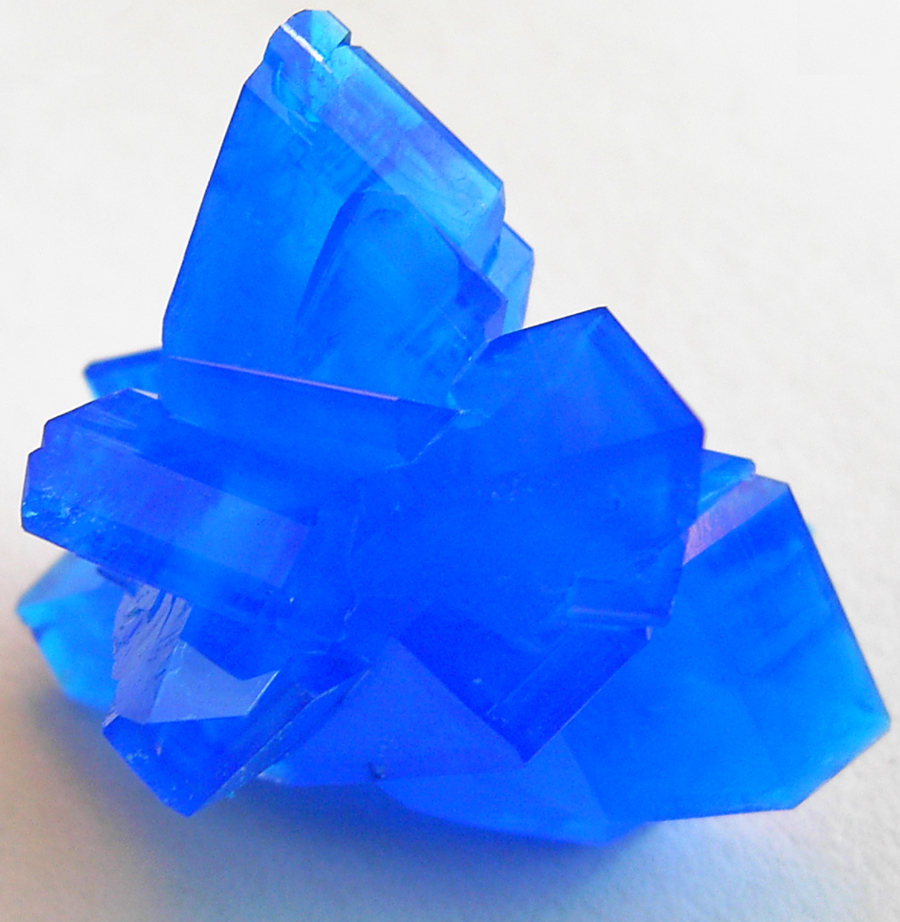
  4. Avatar for CuSO4 + 5 H2O 14. CuSO4 + 5 H2O 1 pt. 7,571

  1. Avatar for gmn
    1. gmn Lv 1
    100 pts. 20,838
  2. Avatar for Th1sN@me!sN0tAPun 2. Th1sN@me!sN0tAPun Lv 1 94 pts. 20,512
  3. Avatar for JuliaBCollet 3. JuliaBCollet Lv 1 88 pts. 19,728
  4. Avatar for BootsMcGraw 4. BootsMcGraw Lv 1 82 pts. 19,508
  5. Avatar for Galaxie 5. Galaxie Lv 1 76 pts. 18,400
  6. Avatar for Bruno Kestemont 6. Bruno Kestemont Lv 1 71 pts. 18,210
  7. Avatar for spvincent 7. spvincent Lv 1 66 pts. 18,116
  8. Avatar for bravosk8erboy 8. bravosk8erboy Lv 1 61 pts. 18,091
  9. Avatar for Aubade01 9. Aubade01 Lv 1 57 pts. 18,084
  10. Avatar for nspc 10. nspc Lv 1 53 pts. 17,904

Comments


Sciren Staff Lv 1

Objectives

Maximum bonus: +8000

Compound Library (max +1000)
Gives a bonus if your current compound is in the library. This uses a local cached version of the Compound Library search results to determine if the compound is in the library. If you manually create a compound that happens to be in the library (or if you load a shared solution with an on-library compound), you may need to submit the compound to the compound library search and wait to get the results back before the objective can properly recognize that the compound is in the library. (If the objective is not updating, try wiggling the structure. See this forum post for more discussion.)

Torsion Quality (max +1000)
Keeps bond rotations in a good range. Using Wiggle or Tweak Ligand can fix bad torsions. (Show highlights torsions to be rotated.)

Number of Rotatable Bonds (max +1000)
Intended to keep the ligand from getting too big and floppy. You can reduce rotatable bonds by deleting groups or forming rings. (Show highlights rotatable bonds.)

Ligand TPSA (max +1000)
Topological Polar Surface Area - Keeps the polar surface area (including buried polar surface) low. To improve, try removing oxygens and nitrogens. (Show highlights atoms contributing to higher TPSA.)

Ligand cLogP (max +1000)
A measure of polarity - Keeps the molecule from getting too hydrophobic. To improve, try adding polar oxygens and nitrogens. (Show highlights atoms contributing to higher cLogP.)

Bad Groups (max +1000)
Gives a bonus for avoiding groups that interfere with assays, which are far from the compounds in the library, or which otherwise have issues. (Show highlights groups at issue.)

Molecular Weight (max +1000)
Keeps the ligand within a reasonable size limit.

Synthetic Accessibility (max +1000)
Keeps the ligand from going too far from the compounds in the library. (Show highlights parts of the molecule at issue.)


Bruno Kestemont Lv 1

Oups (repeat of a question asked in the commnt of the previous puzzle):

Question 1: as scientists, for the same Ligand, do you prefer a solution near to the starting site or i a higher scoring one almost outside the protein ?

Question 2: is a higher scoring solution with 5 Hbonds better than a slightly lower scoring one with 6 Hbonds ?

Question 3: shall I share to scientist several different solutions from the same ligand ? or only the higher scoring one ?

rmoretti Staff Lv 1

1) It depends a bit on the puzzle, but generally keeping near to the starting site is a good thing. Normally there's a particular region/pocket we're targeting, and if you get a ligand well outside that, there's biological considerations which come into play. (e.g. the compound might bind well, but it won't prevent the protein from being active.) Compounds "outside" the protein also tend not to work all that well. – But all that is a bit dependent on the puzzle, how far away from the starting site you can go is a bit system dependent.

I wouldn't necessarily worry about it too much, though. That's one of the purposes of the multiple rounds: if there's issues with how compounds are coming out in the early rounds, we'll tweak the settings to encourage them to be more on target.

2) Both are good. There's probably other considerations which goes into how well the compounds will perform instead of five vs. six hbonds, so we can't a priori say which will be better. We like diversity in the compounds (another reason for the multiple rounds),

3) We generally only look at the highest scoring structure for each ligand. That might change a bit if we adjust the post processing, but for now we assume the best scoring structure is the most representative of how the ligand will actually bind in the protein.

jeff101 Lv 1

What if a ligand gets a reasonable score inside the protein but a better score outside the protein? Which structure do you then use for that ligand? Maybe a procedure like below would work better:

(1) For each ligand, throw out structures that don't make sense (like outside the protein).
(2) Of the remaining structures for each ligand, use the top-scoring one as the best structure for that ligand.