



Icon representing a puzzle

2670: Revisiting CCHFV Round 6

Closed since 5 months ago

Intermediate Overall Small Molecule Design

Summary


Created
September 25, 2025
Expires
Max points
100
Description

The Crimean-Congo Hemorrhagic Fever (CCHF) is a life-threatening zoonotic disease caused by a tick-borne virus. Recent research has revealed the significant role of the viral-encoded Ovarian Tumor (OTU) deubiquitinase in the CCHFV replication process. Based on the most promising compounds, this puzzle will focus on getting an inhibitor for this protein. As the CCHFV-OTU protease interacts with another protein (ubiquitin), the interaction surface is quite large and superficial, making it a challenging binding pocket. For this round we will be focusing on the lower binding pocket. For more details check out theĀ Crimean-Congo Hemorrhagic Fever blog post.

Top groups


  1. Avatar for SETI.Germany 11. SETI.Germany 1 pt. 22,970
  2. Avatar for Mahmut Oyunda 12. Mahmut Oyunda 1 pt. 22,609
  3. Avatar for BIOL2020AB Fall2025 13. BIOL2020AB Fall2025 1 pt. 22,579
  4. Avatar for Folders_BIOL6105 14. Folders_BIOL6105 1 pt. 22,579
  5. Avatar for Foldit Staff 15. Foldit Staff 1 pt. 22,259

  1. Avatar for Bruno Kestemont
    1. Bruno Kestemont Lv 1
    100 pts. 25,400
  2. Avatar for gmn 2. gmn Lv 1 94 pts. 25,287
  3. Avatar for SemperRabbit 3. SemperRabbit Lv 1 88 pts. 24,953
  4. Avatar for nspc 4. nspc Lv 1 82 pts. 24,918
  5. Avatar for BootsMcGraw 5. BootsMcGraw Lv 1 77 pts. 24,806
  6. Avatar for AlkiP0Ps 6. AlkiP0Ps Lv 1 71 pts. 24,629
  7. Avatar for ichwilldiesennamen 7. ichwilldiesennamen Lv 1 66 pts. 24,346
  8. Avatar for ucad 8. ucad Lv 1 62 pts. 24,209
  9. Avatar for JuliaBCollet 9. JuliaBCollet Lv 1 57 pts. 24,078
  10. Avatar for carxo 10. carxo Lv 1 53 pts. 24,053

Comments


Sciren Staff Lv 1

Objectives

Maximum bonus: +8500

Compound Library (max +750)
Gives a bonus if your current compound is in the library. This uses a local cached version of the Compound Library search results to determine if the compound is in the library. If you manually create a compound that happens to be in the library (or if you load a shared solution with an on-library compound), you may need to submit the compound to the compound library search and wait to get the results back before the objective can properly recognize that the compound is in the library. (If the objective is not updating, try wiggling the structure. See this forum post for more discussion.)

Torsion Quality (max +1000)
Keeps bond rotations in a good range. Using Wiggle or Tweak Ligand can fix bad torsions. (Show highlights torsions to be rotated.)

Number of Rotatable Bonds (max +1000)
Intended to keep the ligand from getting too big and floppy. You can reduce rotatable bonds by deleting groups or forming rings. (Show highlights rotatable bonds.)

Ligand TPSA (max +1000)
Topological Polar Surface Area - Keeps the polar surface area (including buried polar surface) low. To improve, try removing oxygens and nitrogens. (Show highlights atoms contributing to higher TPSA.)

Ligand cLogP (max +1000)
A measure of polarity - Keeps the molecule from getting too hydrophobic. To improve, try adding polar oxygens and nitrogens. (Show highlights atoms contributing to higher cLogP.)

Bad Groups (max +1000)
Gives a bonus for avoiding groups that interfere with assays, which are far from the compounds in the library, or which otherwise have issues. (Show highlights groups at issue.)

Good Groups (max +1000)
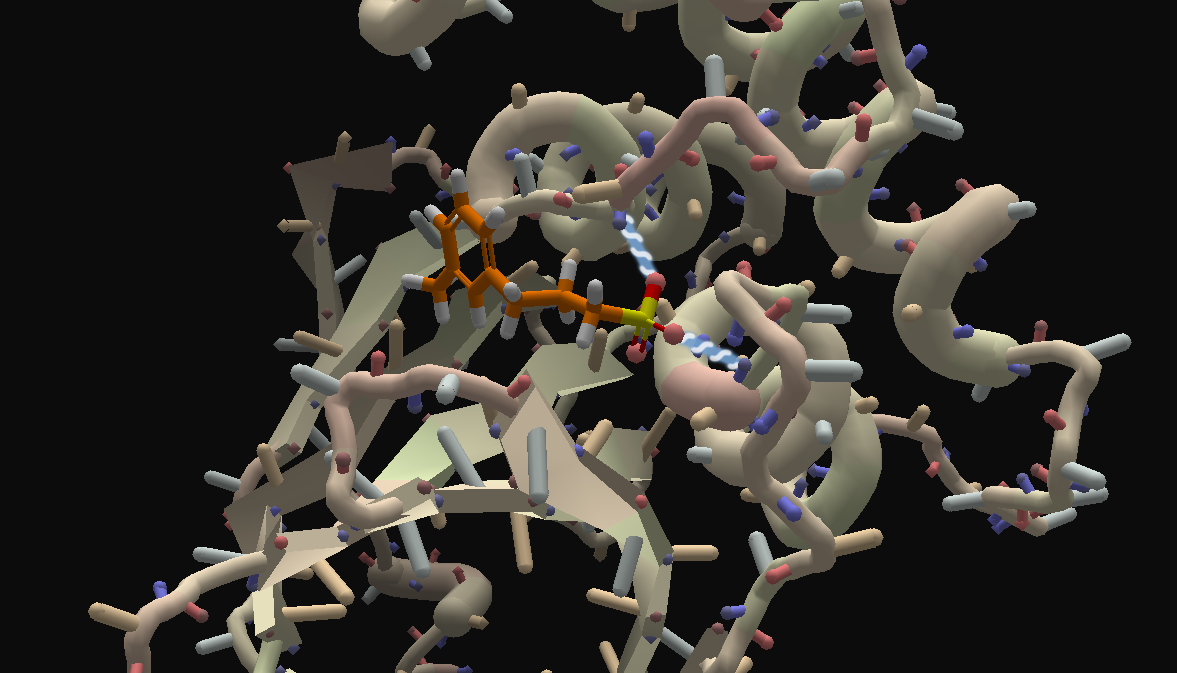
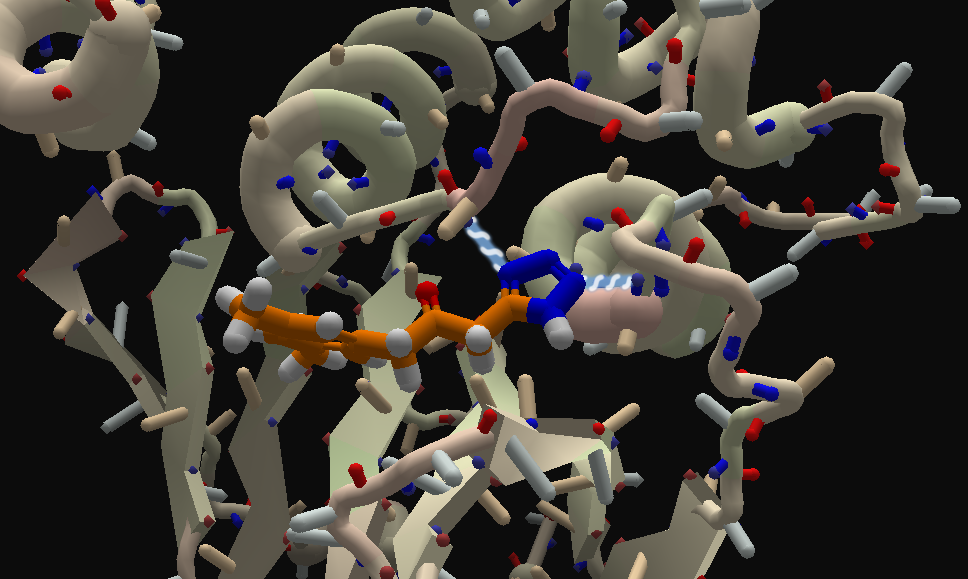
Gives a bonus if the molecule contains either a sulfonate or a tetrazole group. A previous study has shown that molecules containing one of these groups exhibit better affinities, due to their binding to the protein, as illustrated in the following pictures.

Sulfonate Tetrazole

Molecular Weight (max +1000)
Keeps the ligand within a reasonable size limit.

Synthetic Accessibility (max +750)
Keeps the ligand from going too far from the compounds in the library. (Show highlights parts of the molecule at issue.)

BootsMcGraw Lv 1

For those of you who haven't been to chemistry class in forty years: A sulfonate is a sulfur atom that is bonded to three oxygen atoms, two of which have double bonds to the sulfur. A tetrazole is a five-member ring made of one carbon and four nitrogens. One pair of adjacent nitrogens is double-bonded to each other; another nitrogen is double-bonded to the carbon.

In other puzzles, we were given a stout TPSA penalty for configurations like this. Is this going to be the new norm?

Bruno Kestemont Lv 1

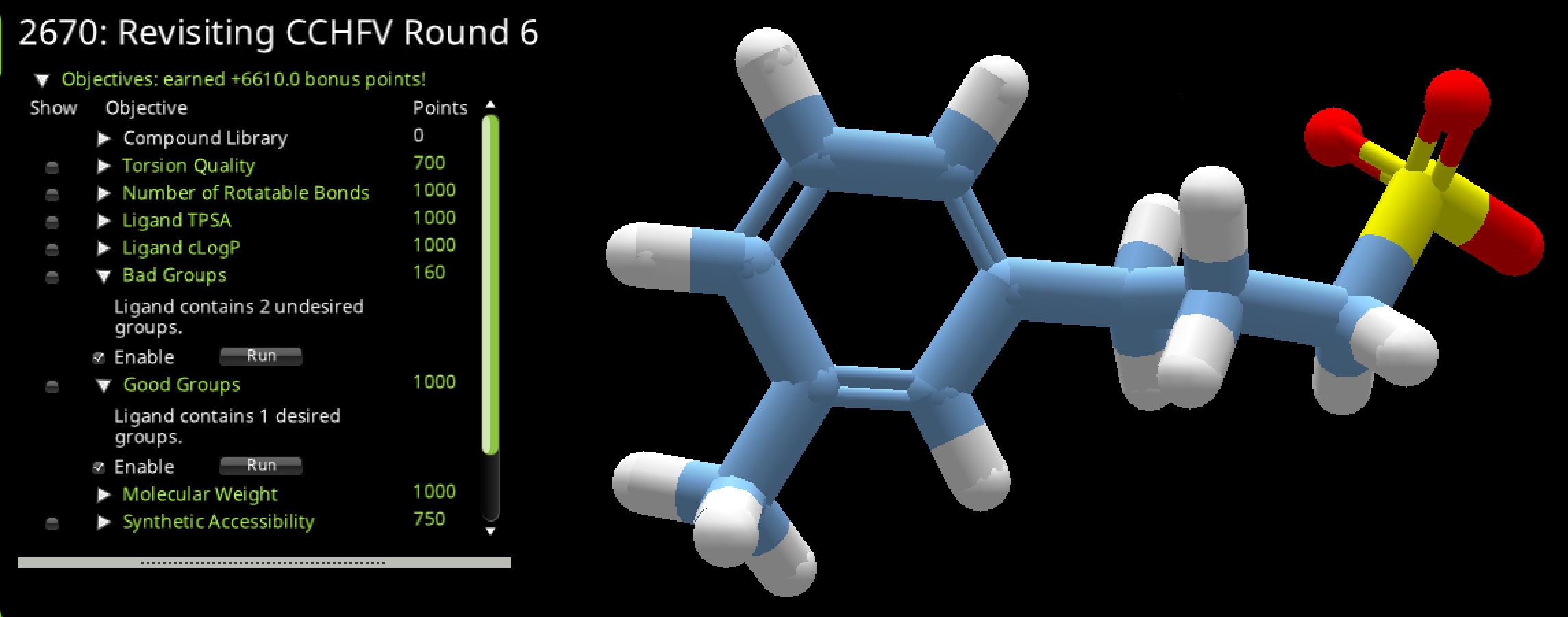
When I try a sulfonate, I get a bad Group malus (and the Good Group bonus). Does any player succeed to get both bonus for sulfonate ?

LociOiling Lv 1

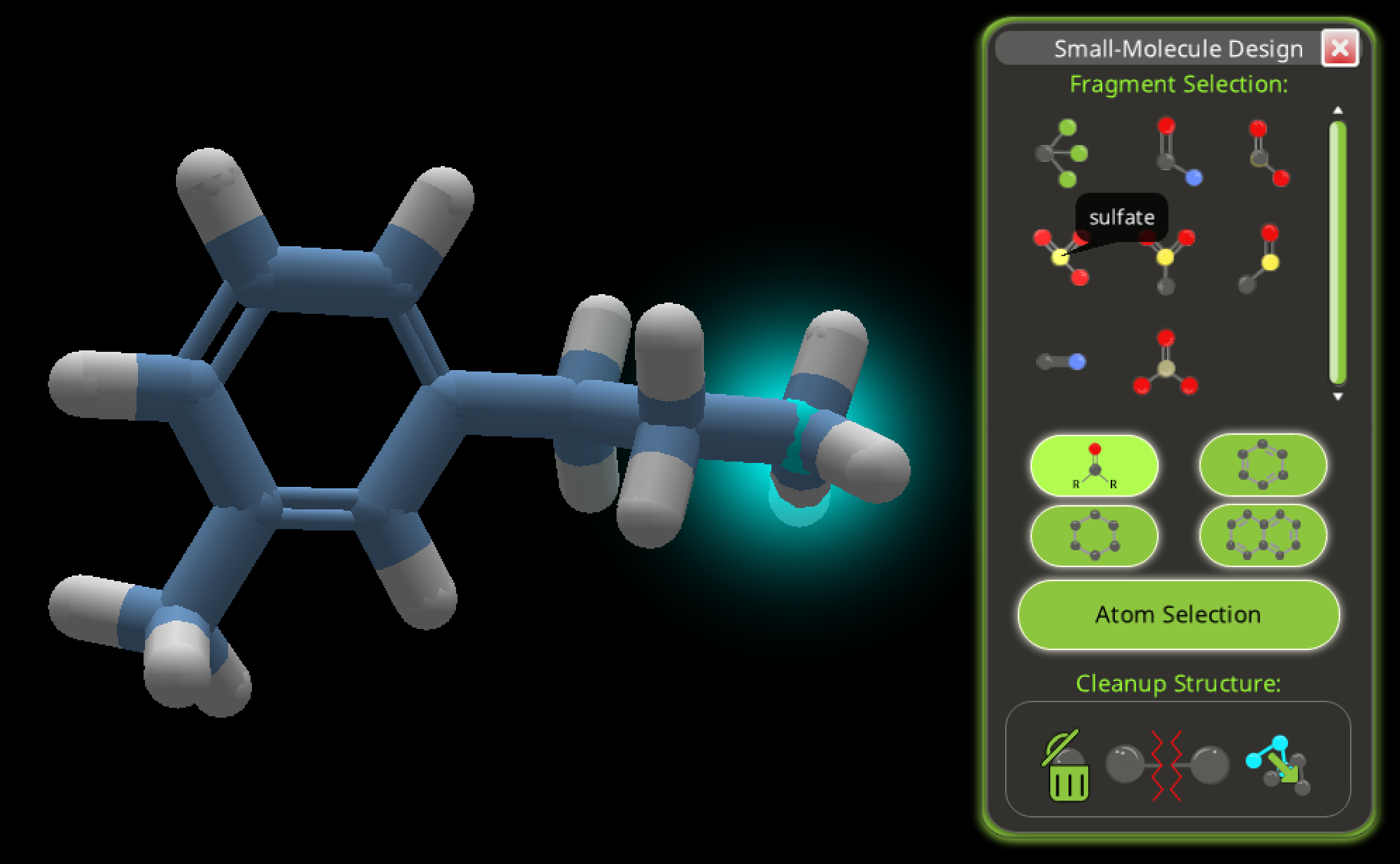
I tried creating the sulfonate example shown in the puzzle comments above. This molecule gets the 1000 point good groups bonus, but the bad groups bonus drops from 1000 to 160. Gain 1000 points, but lose 840 points.


The sulfate fragment under functional groups is the easy way to build a sulfonate. You can also do the same thing one atom at a time, with the same bonus results.

LociOiling Lv 1

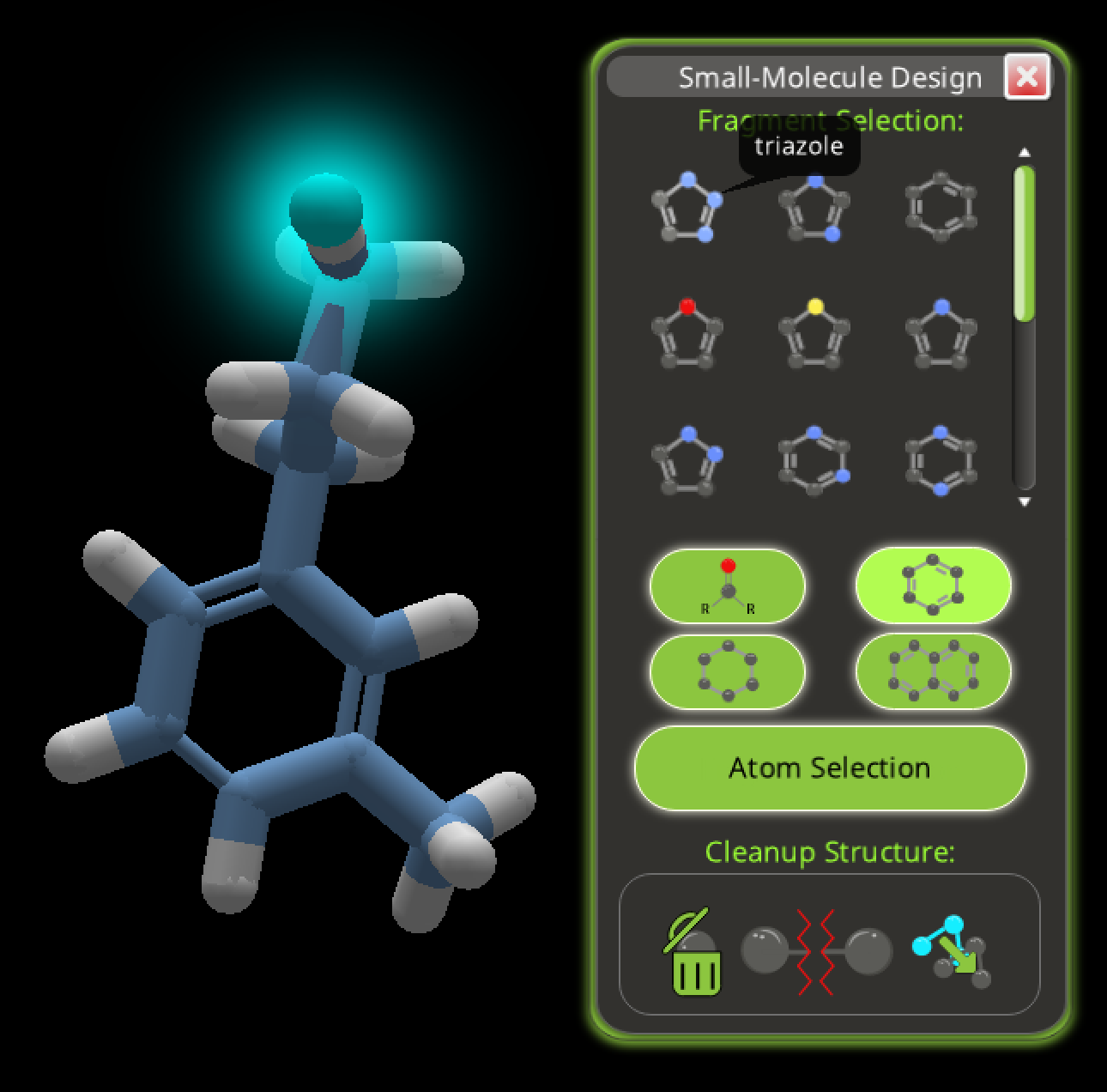
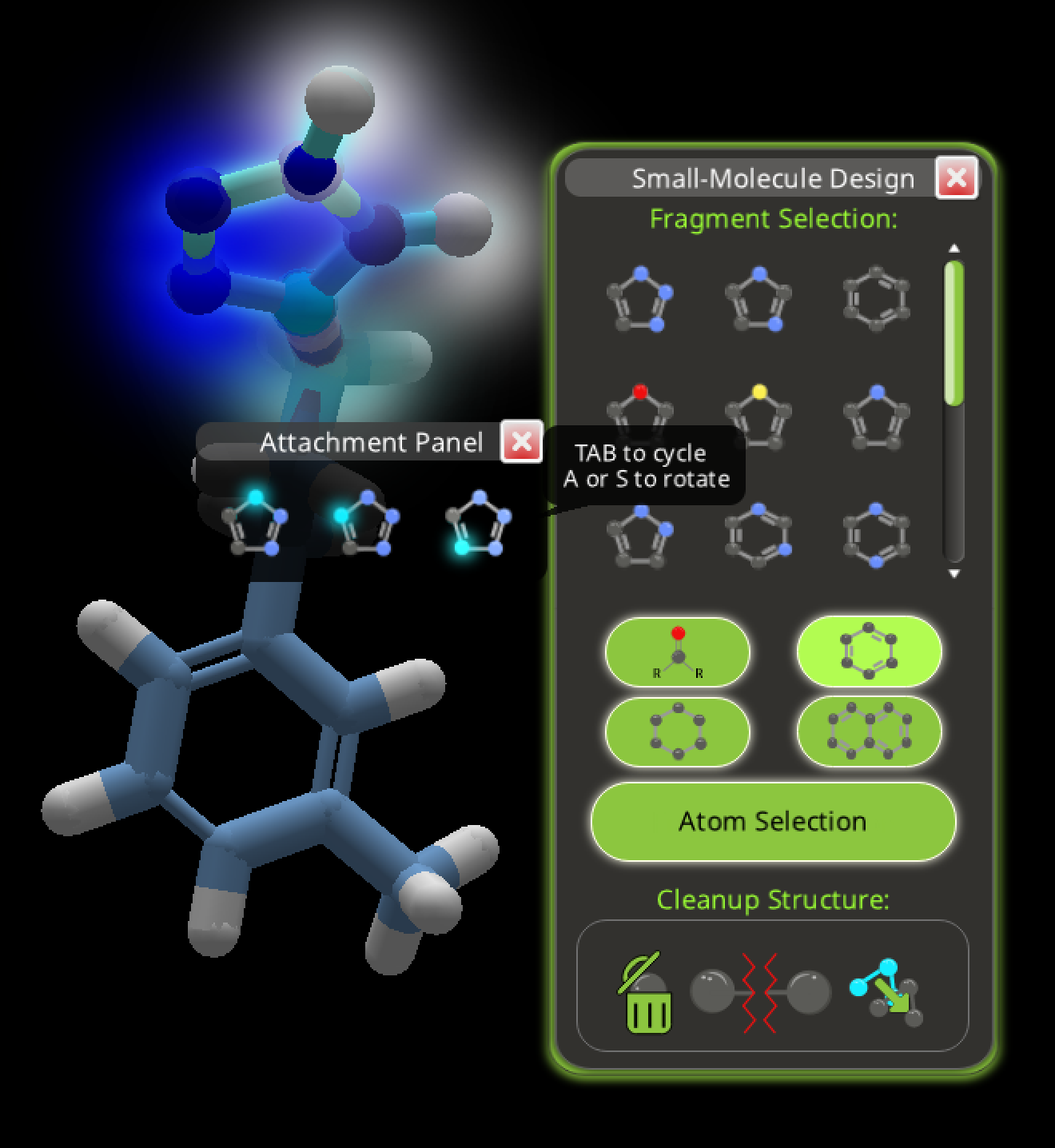
There's no tetrazole fragment available, but the triazole fragment is just a nitrogen short. It's the first one in the "unsaturated cyclics" panel.

The bonding pattern seems to be important for the bonus. Selecting the rightmost attachment point is one way to match the pattern shown in the example shown in the first comment.

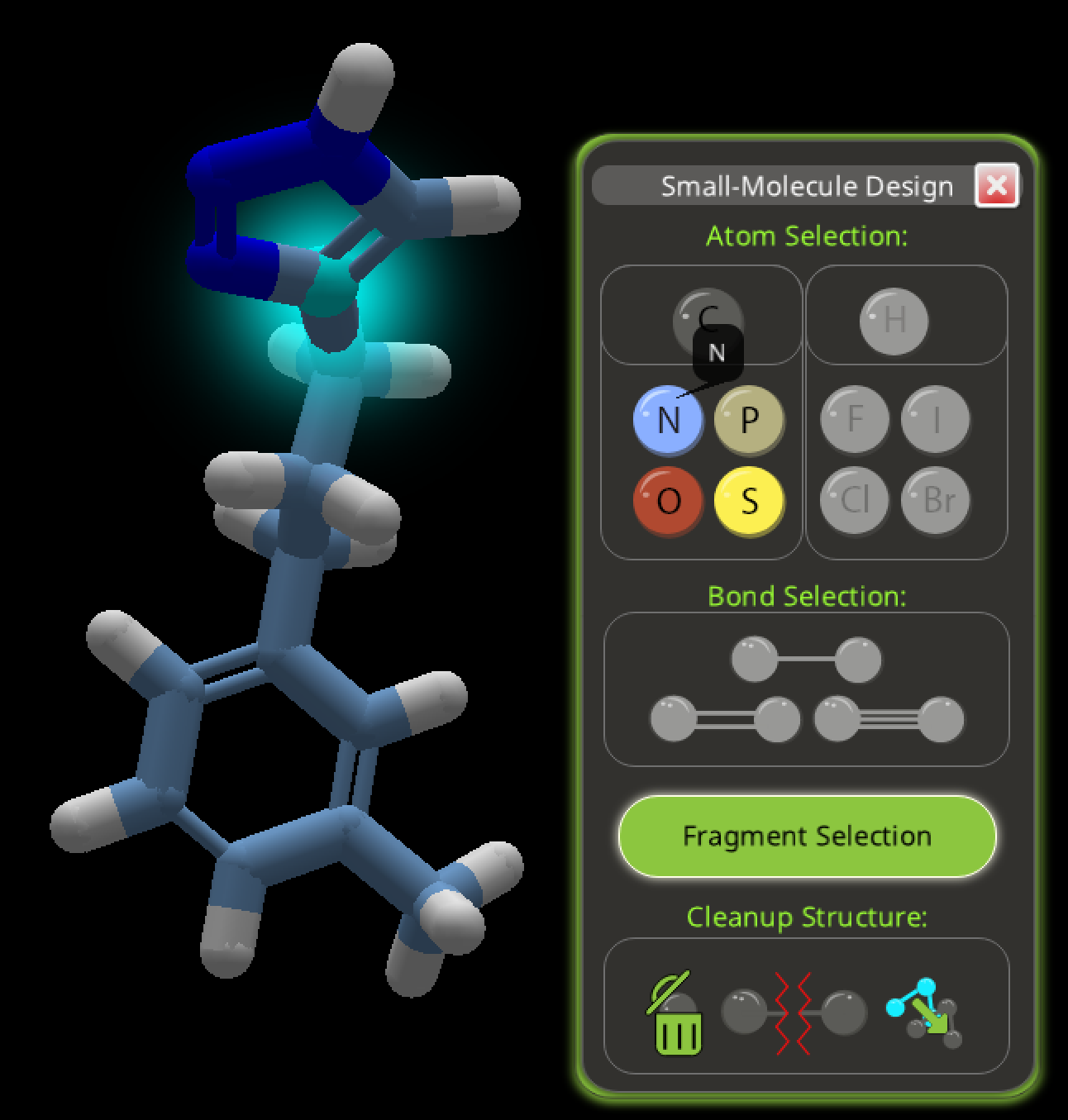
Back in atom selection mode, replace one carbon with nitrogen.

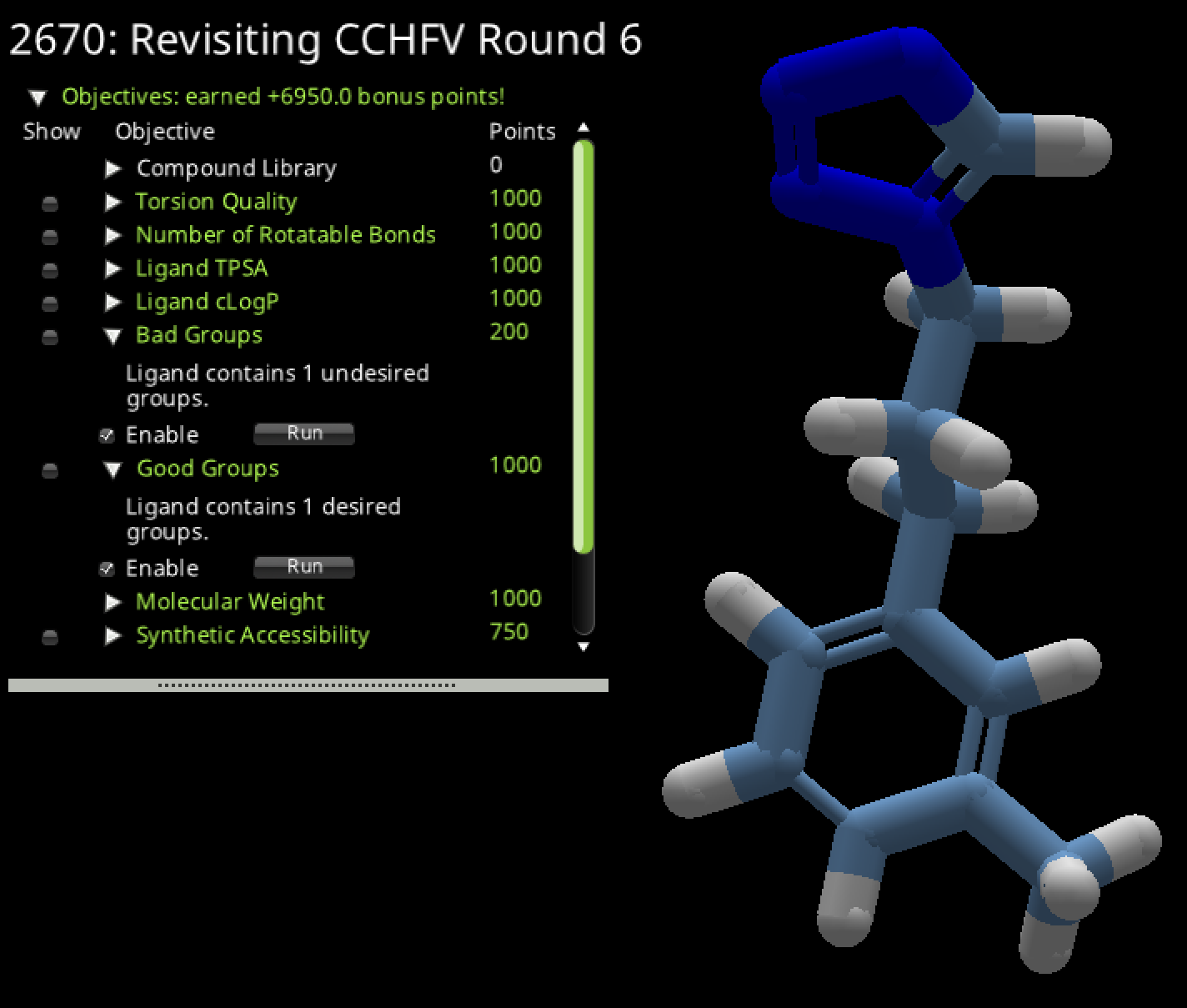
The result gets the good groups bonus, but there's again a deduction for bad groups. However, the full bad groups bonus is possible with a different configuration.

LociOiling Lv 1

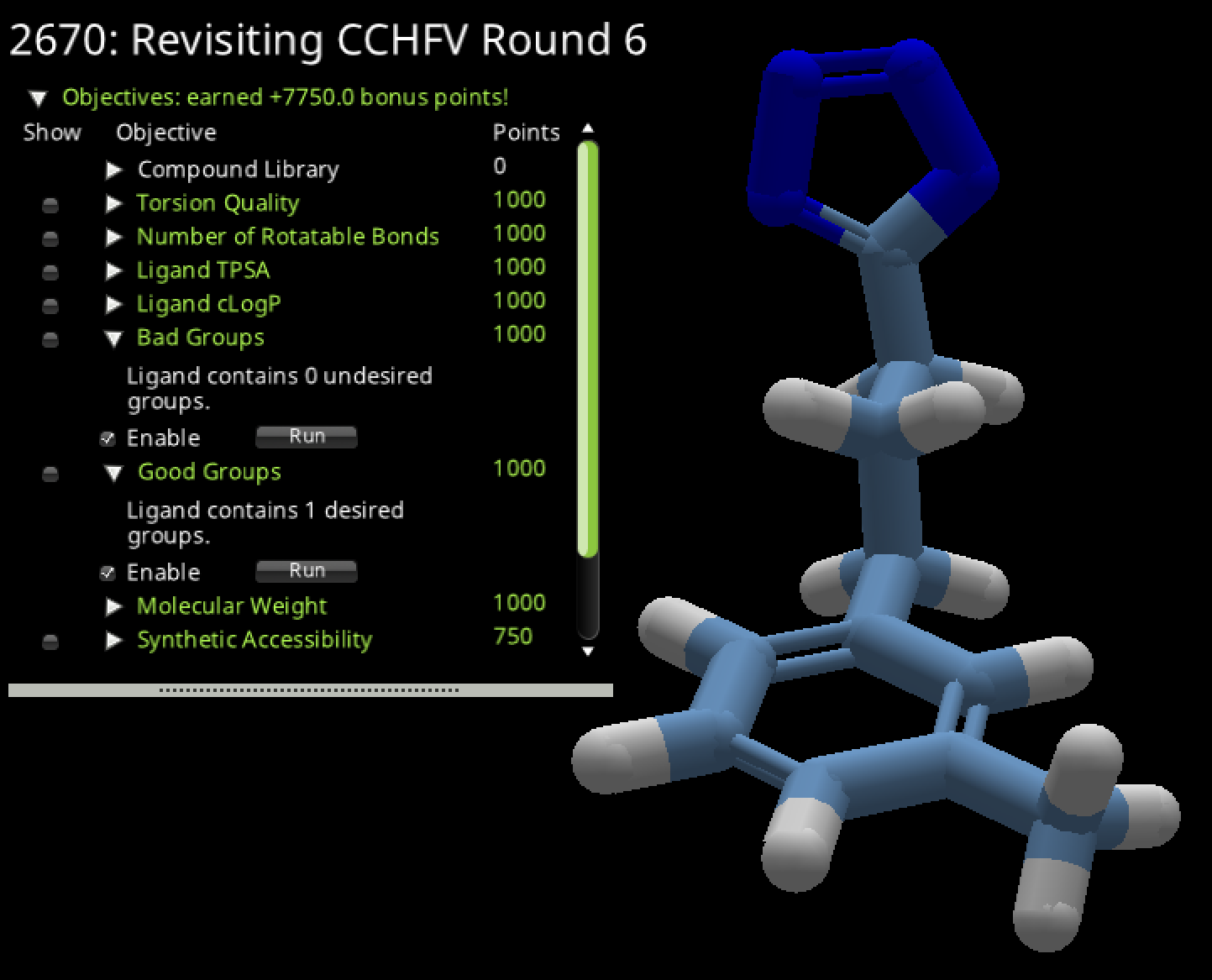
By shifting the fourth nitrogen and the double bonds, the full good groups/bad groups bonus is available.

Let's hope something similar works for the sulfonate.