

Icon representing a puzzle

2706: NaV1.7 Round 12

Closed since 2 months ago

Intermediate Overall Small Molecule Design

Summary


Created
December 26, 2025
Expires
Max points
100
Description

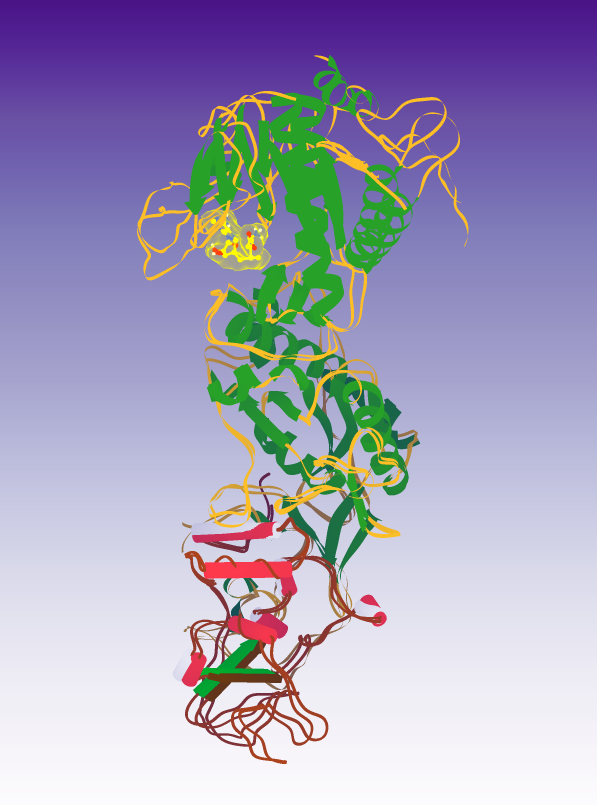
NaV1.7 is a voltage-gated sodium channel that plays a key role in the generation and propagation of action potentials, especially in neurons involved in pain signaling. Genetic studies have revealed that loss-of-function mutations in NaV1.7 can result in congenital insensitivity to pain, while gain-of-function mutations are associated with severe, painful disorders. This makes NaV1.7 a promising therapeutic target for the development of non-addictive painkillers—a much-needed alternative to current opioid-based treatments.

In this puzzle, your goal is to design small molecules that bind selectively to Voltage Sensing Domain IV (VSD4) of NaV1.7 in its activated conformation. The VSDs act as regulatory switches for the channel, and locking VSD4 in its active state helps stabilize the entire channel in an activated non-conductive conformation.

One challenge is that VSD4 is embedded in the lipid membrane, so you’ll need to carefully consider the surrounding lipid environment. Ideal molecules should engage the target deeply and specifically without protruding excessively into the membrane, which could compromise target engagement in vivo.

Your creativity and intuition could lead to a breakthrough—you might just design the next-generation analgesic to transform how we treat pain!

For Round twelve our experimental collaborators are interested in the hydrophobic group which is sticking out of the pocket and into the membrane environment, "anchoring" the ligand. Ideally, as you change the molecule you'll keep this group (or something similar). As such, we've added a "Membrane Contact" objective, which encourages you to make good hydrophobic bonding contact to the protein sidechains in this membrane-contacting region.

Top groups


  1. Avatar for SETI.Germany 11. SETI.Germany 1 pt. 13,781
  2. Avatar for CBE_ProEn_2025 12. CBE_ProEn_2025 1 pt. 12,688

  1. Avatar for Floddi
    1. Floddi Lv 1
    100 pts. 30,004
  2. Avatar for Bletchley Park 2. Bletchley Park Lv 1 92 pts. 27,494
  3. Avatar for ucad 3. ucad Lv 1 84 pts. 26,882
  4. Avatar for gmn 4. gmn Lv 1 77 pts. 26,416
  5. Avatar for alcor29 5. alcor29 Lv 1 70 pts. 26,061
  6. Avatar for arotomic 6. arotomic Lv 1 64 pts. 25,734
  7. Avatar for Th1sN@me!sN0tAPun 7. Th1sN@me!sN0tAPun Lv 1 58 pts. 25,534
  8. Avatar for Galaxie 8. Galaxie Lv 1 53 pts. 25,228
  9. Avatar for LociOiling 9. LociOiling Lv 1 48 pts. 25,121
  10. Avatar for rosie4loop 10. rosie4loop Lv 1 44 pts. 24,356

Comments


Sciren Staff Lv 1

Objectives

Maximum bonus: +9000

Membrane Contact (max +1000)
Gives you a bonus if you make hydrophobic contact to the four residues around the membrane access channel. (Show highlights residues to contact.)

Torsion Quality (max +1000)
Keeps bond rotations in a good range. Using Wiggle or Tweak Ligand can fix bad torsions. (Show highlights torsions to be rotated.)

Number of Rotatable Bonds (max +1000)
Intended to keep the ligand from getting too big and floppy. You can reduce rotatable bonds by deleting groups or forming rings. (Show highlights rotatable bonds.)

Ligand TPSA (max +1000)
Topological Polar Surface Area - Keeps the polar surface area (including buried polar surface) low. To improve, try removing oxygens and nitrogens. (Show highlights atoms contributing to higher TPSA.)

Ligand cLogP (max +1000)
A measure of polarity - Keeps the molecule from getting too hydrophobic. To improve, try adding polar oxygens and nitrogens. (Show highlights atoms contributing to higher cLogP.)

Fraction of four-bonded carbons (max +1000)
Measures how carbons with bonds to four atoms ("sp3 hybridized") there are. Too few (too many double and triple bonded carbons) is bad. (Show highlights carbon atoms at issue.)

Bad Groups (max +1000)
Gives a bonus for avoiding groups that interfere with assays, which are far from the compounds in the library, or which otherwise have issues. (Show highlights groups at issue.)

Molecular Weight (max +1000)
Keeps the ligand within a reasonable size limit.

Synthetic Accessibility (max +1000)
Keeps the ligand from going too far from the compounds in the library. (Show highlights parts of the molecule at issue.)